
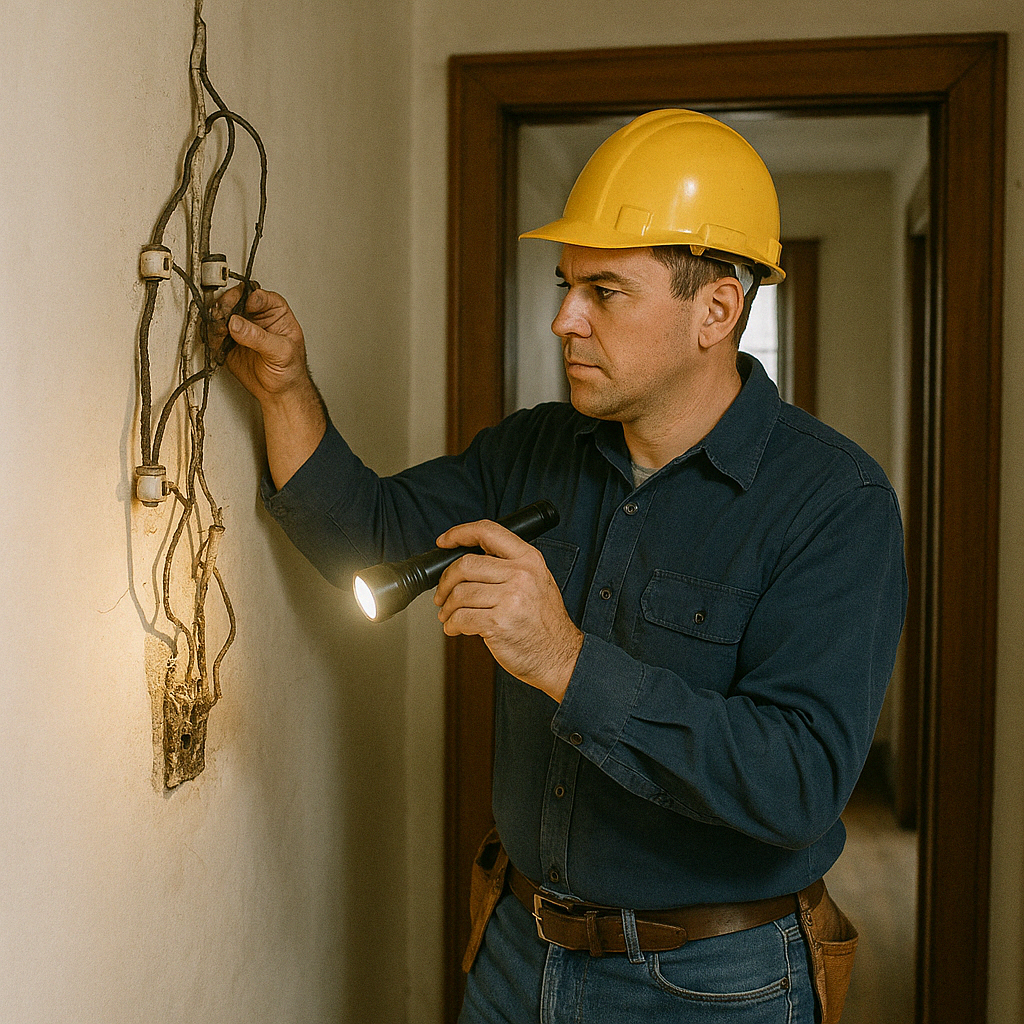
Older homes often boast charm, character, and solid construction, but behind the walls, they may hide serious electrical risks. If your property is more than 30 years old, chances are the electrical system was never designed to meet the demands of modern living.
From limited power points to outdated switchboards, these ageing systems can put your family’s safety and your property’s value at risk. Fire & Rescue NSW reports that electrical faults are one of the leading causes of house fires in older properties.
Let’s explore the most common electrical issues in older homes and how a licensed electrician can help you bring your system up to modern Australian standards.
Outdated Wiring (Cloth, Rubber, or Aluminium)
Old wiring materials such as VIR (Vulcanised Indian Rubber), cotton-insulated, or aluminium wiring were common in homes built before the 1980s. While they may have lasted decades, they’re no match for today’s safety standards.
Why It’s a Problem:
- Rubber and cloth insulation degrade, crack, or become brittle over time
- Aluminium wiring expands and contracts, loosening over time and increasing fire risk
- Old wiring isn’t rated for modern appliances and energy loads
Modern Solution:
- Replace outdated circuits with PVC-insulated copper wiring
- Upgrade to a system that supports current power needs safely
- Include a full electrical inspection to identify hidden hazards
Old or Non-Compliant Switchboards
Switchboards are central to your home’s electrical safety. If yours still uses ceramic fuses or lacks RCD protection (safety switches), it’s outdated and possibly dangerous.
Risks of an Old Switchboard:
- No automatic shutoff in the event of a fault
- No surge protection for sensitive devices
- Inability to support multiple circuits or high-load appliances
What a Modern Switchboard Offers:
- RCDs (Residual Current Devices) that prevent electrocution
- Modern circuit breakers for each circuit
- Surge protection and capacity for solar, EV chargers, or future upgrades
An upgrade not only improves safety but ensures your home complies with Australian Standards (AS/NZS 3000).
Insufficient Power Points and Unsafe Extensions
Older homes were built before the rise of entertainment units, home offices, and countless devices. As a result, they typically feature too few power outlets.
Common Problems:
- Overloaded power boards and extension cords
- Double adaptors stacked dangerously
- Damaged sockets from overuse
How to Fix It:
- Add additional outlets in key areas like kitchens, bedrooms, and living rooms
- Upgrade to outlets with built-in USB charging or smart controls
- Replace brittle or discoloured outlets that show signs of heat damage
A qualified electrician can assess your needs and ensure circuits are balanced for safe load management.
Lack of Safety Switches (RCDs)
Safety switches are designed to cut power in milliseconds when they detect a fault, protecting people from electric shocks.
Signs Your Home May Lack RCDs:
- No “test” buttons on the switchboard
- No RCD protection for power points or lighting circuits
- The house predates 1991 (before RCDs were mandated for new builds)
Why RCDs Are Essential:
- Prevent fatal electric shocks
- Required for rental compliance in many Australian states
- Protect children, pets, and anyone using electrical devices
Every modern switchboard should have RCDs on all final sub-circuits, including lighting and power.
Old Light Switches and Fixtures
Light switches and fittings may still function, but aged plastic, corroded terminals, and outdated mounting systems pose long-term risks.
Warning Signs:
- Warm or buzzing switches
- Cracked or yellowed plastic
- Flickering lights when switching on
- Push-button or round toggle switches from the 1950s–70s
What You Can Do:
- Replace old switches with modern, safe and efficient designs
- Upgrade to smart lighting systems or dimmer controls
- Check that fixtures are compatible with LED globes
Not only is this a safety upgrade, but it can also improve your lighting and reduce energy usage.
No Earthing or Faulty Earthing Systems
Older homes often have insufficient or no earthing, which is critical for directing electrical faults safely into the ground.
Why It Matters:
- Poor earthing increases the risk of electrocution
- Appliances and metal fittings can become live during faults
- May cause sensitive devices to fail or short-circuit
How an Electrician Can Help:
- Test and upgrade your home’s earthing system
- Install bonding to metallic pipes or fixtures if required
- Ensure compliance with AS/NZS earthing standards
Proper earthing is fundamental for both safety and compliance.
Undersized Electrical Supply
Many older homes were built with 6mm or 10mm consumer mains, which are now too small for modern electrical loads.
What This Causes:
- Lights dim when appliances run
- Breakers tripping under modest loads
- Limitations for installing air conditioning, solar, or electric cooking appliances
Solution:
- Upgrade your mains and meter panel to handle increased demand
- Allow room for future upgrades, like EV chargers or solar batteries
This ensures your home remains functional and adaptable for years to come.
Hidden Junction Boxes and DIY Modifications
Decades of renovations or DIY tinkering often result in non-compliant wiring hidden behind walls or ceilings.
Signs of Hidden Hazards:
- Outlets or lights that don’t work
- Odd electrical behaviour (intermittent power, buzzing)
- Past DIY owners with unclear renovation records
Only a licensed electrician should open walls and inspect hidden junctions, replace dodgy DIY work, and restore safe connectivity.
How to Modernise Electrical Systems in an Older Home
Upgrading an older home doesn’t mean tearing it apart. A professional electrician can assess the system and develop a plan to modernise your wiring in stages, without ruining the aesthetics or structure.
Modernisation May Include:
- Switchboard replacement and RCD installation
- Full or partial rewiring
- Adding power outlets and USB ports
- New lighting installations
- Earthing and mains upgrades
- Smart home integration, where appropriate
Modernisation boosts safety, functionality, compliance, and value, while preserving the charm that makes older homes special.
Restore Charm and Upgrade Safety With Modern Electrical Work
Older homes were built to last, but their electrical systems weren’t built for today’s lifestyle. If your home shows signs of ageing wiring, insufficient safety switches, or overloaded outlets, it’s time to act.
By identifying and resolving the common electrical issues in older homes, you can protect your property, your loved ones, and your peace of mind. Don’t wait for a fault to force your hand—contact a licensed electrician to future-proof your home today.