
Lighting accounts for around 10% of the average household electricity bill in Australia. With energy prices on the rise and a growing focus on sustainable living, switching to more energy-efficient lighting is one of the simplest and most cost-effective upgrades you can make.
But with so many choices on the market—from halogens and CFLs to LEDs—how do you know which is best? And does the type of room or usage make a difference?
This guide breaks down the different types of light bulbs and helps you choose the best lighting for energy efficiency throughout your home.
Why Energy-Efficient Lighting Matters
Energy-efficient lighting isn’t just about cutting down your electricity bill—it’s also about reducing carbon emissions and extending bulb lifespan.
Benefits of Choosing Efficient Lighting:
- Lower power consumption (up to 80% less than traditional bulbs)
- Longer bulb life, reducing replacement costs
- Reduced heat output, making your home cooler in summer
- Smaller environmental footprint, especially with LED options
The right lighting setup saves you money and supports a more sustainable household.
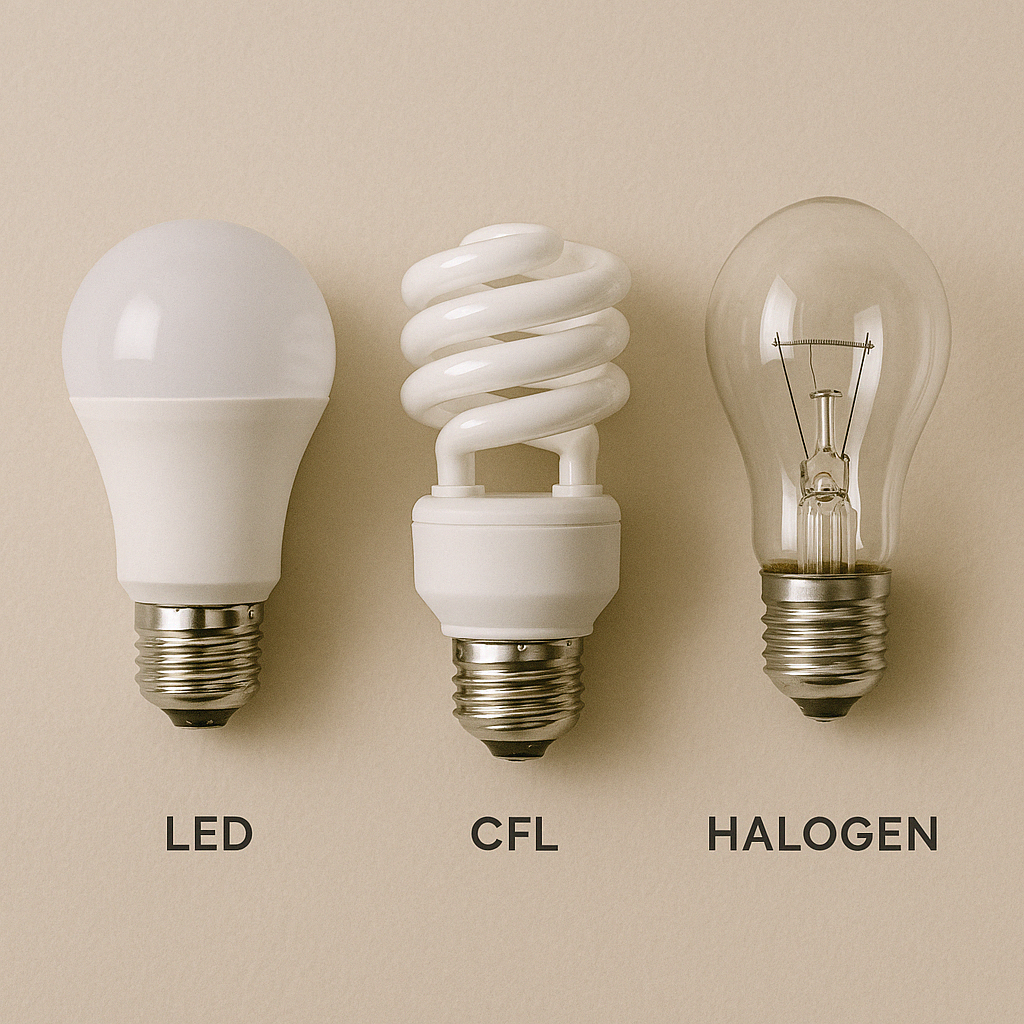
Lighting Options Compared: LEDs, CFLs, and Halogens
Let’s look at the three main types of bulbs available in Australian homes today:
1. Light Emitting Diodes (LEDs)
Best Overall for Energy Efficiency
LEDs use semiconductor technology to produce light with minimal heat loss. They are the most energy-efficient option currently on the market.
- Energy use: ~85% less than incandescent
- Lifespan: Up to 25,000 hours
- Warm-up time: Instant
- Cost: Higher upfront, lower lifetime cost
- Best for: All rooms, including high-use areas (kitchens, lounges, hallways)
Bonus: Many LEDs are now dimmable and available in various colour temperatures (cool, daylight, warm white).
2. Compact Fluorescent Lamps (CFLs)
Good, But Being Phased Out
CFLs are a more efficient alternative to old incandescent bulbs, but they contain a small amount of mercury, which makes disposal an issue.
- Energy use: ~70% less than incandescent
- Lifespan: 6,000–15,000 hours
- Warm-up time: May take a few seconds to reach full brightness
- Cost: Lower upfront, moderate lifespan
- Best for: Low-traffic areas like garages or storage rooms
While they’re still used in some homes, CFLs are less popular due to their environmental concerns and slow start-up.
3. Halogen Bulbs
Least Efficient of the Modern Options
Halogen bulbs are a type of incandescent bulb that burns slightly more efficiently. They’re being phased out in Australia due to poor efficiency.
- Energy use: ~30% less than traditional incandescent
- Lifespan: 1,000–2,000 hours
- Warm-up time: Instant
- Cost: Cheap upfront, expensive long-term
- Best for: Not recommended for energy-conscious homes
While they offer a pleasant, natural light, halogens produce excessive heat and require frequent replacements—making them the least cost-effective option long-term.
How to Choose the Best Lighting for Each Room
Energy efficiency doesn’t just come down to the bulb—it also depends on how and where it’s used. Here’s how to make smart lighting choices across your home.
Kitchen
- Best bulb type: LED
- Why: Kitchens need bright, clear light. Use daylight or cool white LEDs for visibility.
- Fixtures to consider: Recessed downlights, LED strip lights under cabinets
- Tip: Use task lighting over workspaces and dimmers for ambient control
Living Room
- Best bulb type: Dimmable LED
- Why: Adapt lighting for TV time, reading, or entertaining
- Fixtures to consider: Floor lamps, pendant lights with dimmable bulbs
- Tip: Use warm white LEDs to create a comfortable, inviting atmosphere
Bathroom
- Best bulb type: Cool white LED (IP-rated for wet zones)
- Why: Bright light is essential for grooming tasks
- Fixtures to consider: Ceiling downlights, mirror lights
- Tip: Avoid halogens—they get too hot and don’t last in humid environments
Bedroom
- Best bulb type: Warm white LED
- Why: Creates a calming, restful mood
- Fixtures to consider: Bedside lamps, pendant lights with diffusers
- Tip: Consider smart bulbs for scheduling lights to dim before bedtime
Outdoor Areas
- Best bulb type: Weather-rated LED
- Why: LEDs handle temperature changes and last longer outdoors
- Fixtures to consider: Motion-sensor lights, garden spotlights
- Tip: Use solar-powered LED options to eliminate energy use entirely
Understanding Lumens vs Watts
In the past, we used watts to judge brightness. But watts measure energy use, not output. Today, you should look at lumens instead.
Lumens Guide:
- 450 lumens: Comparable to a 40W incandescent
- 800 lumens: Comparable to a 60W incandescent
- 1,600 lumens: Comparable to a 100W incandescent
LEDs provide the same brightness at a fraction of the wattage, making them far more efficient.
Smart Lighting: Even More Efficiency and Control
Smart LED bulbs take energy savings one step further. These Wi-Fi or Bluetooth-enabled bulbs can be controlled remotely and scheduled to suit your routine.
Smart Features Include:
- Voice or app control (Google, Alexa, Apple)
- Scheduling (turn lights on/off automatically)
- Dimming and colour changes
- Motion sensor activation
Smart lighting helps prevent unnecessary use, especially in busy households with kids or frequent guests.
Lighting Maintenance Tips for Efficiency
- Clean light fixtures and covers regularly to maintain brightness
- Replace faulty or flickering bulbs promptly
- Switch off the lights in unoccupied rooms
- Use timers or motion sensors for outdoor or hallway lighting
Energy-efficient lighting isn’t just about choosing the right bulb—it’s about using it wisely.
Light Smarter, Live Brighter
So, what is the best lighting for energy efficiency? The answer is clear: LED lighting wins across the board. It’s brighter, lasts longer, uses less energy, and offers more flexibility for your home.
When choosing lighting, match the bulb type to the space and your lifestyle needs. Whether it’s a smart bulb in the hallway or a warm white LED in the bedroom, these small changes can have a lasting impact on your energy bills—and your comfort.